

AutoLAB
Project origins
Practical education
made accessible
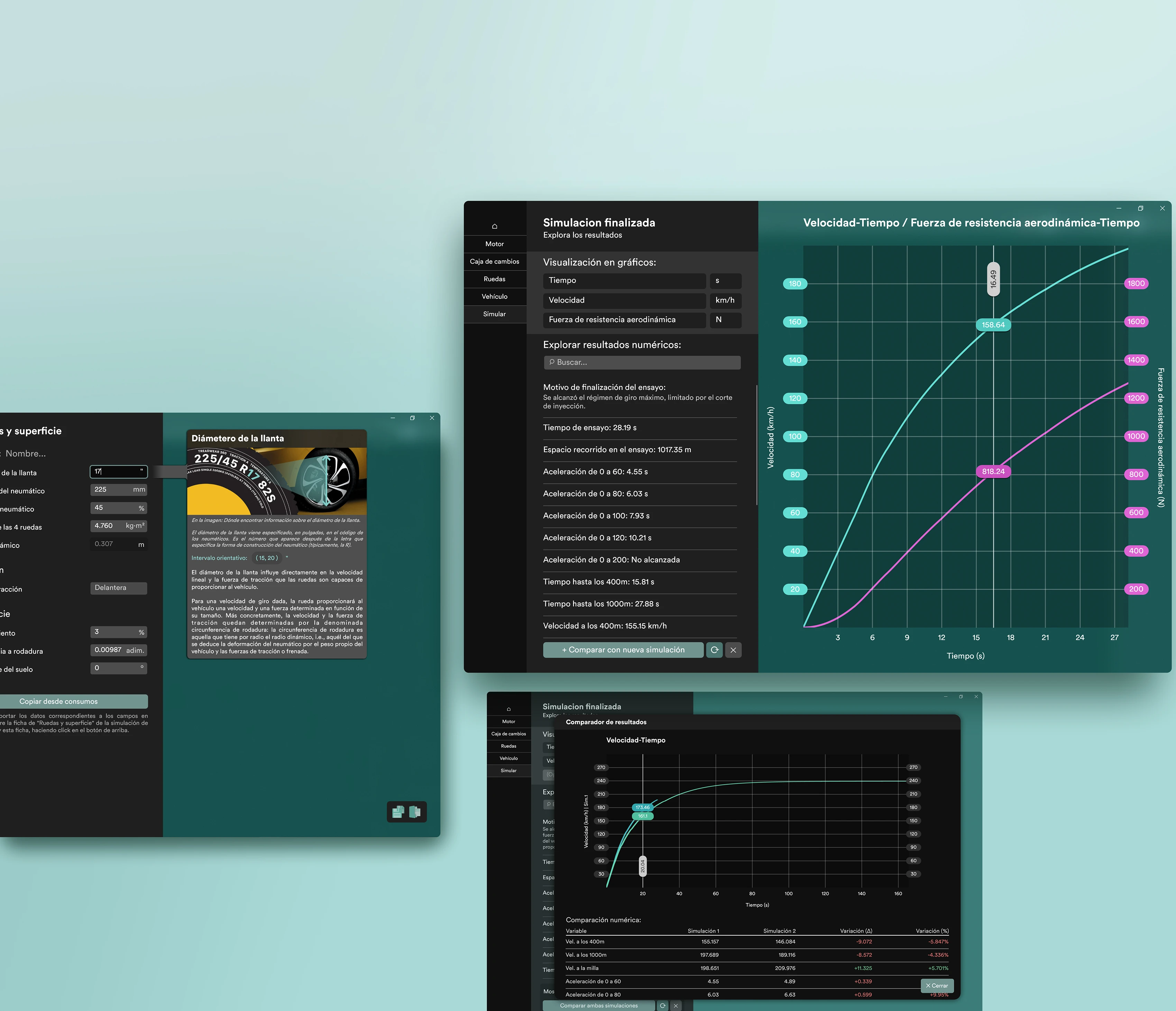
AutoLAB is a didactic engineering simulation software that models the behavior of road vehicles. It is part of Universidad Politécnica de Madrid's UPMDesk application suite, available for students to explore the concepts taught in their vehicle and engine dynamics-related courses.
Teaching about vehicle dynamics and reciprocating engines is not an easy task, even more so with class sizes reaching one hundred students. Although these fields are often based on simple physical concepts, the high number of variables involved can complicate the learning process.
AutoLAB makes it easy to understand how each of these variables influences a vehicle's behavior, by giving students the freedom to modify parameters and first-hand observe the evolution of the results.
Project origins
The project started on the initiative of Professor Luis Miguel Rodríguez Antón. After I completed his Reciprocating Engines course in January 2020, he reached out to me with a challenge in mind: to make his practical lectures more effective by allowing students to freely explore and experiment with the course's concepts on their own.
In a course with a syllabus as extensive as this one, the teaching staff's availability to carry out practical lessons is limited to 3 or 4 days per course. And with over 100 students enrolled per semester, it is hard to provide practical hands-on classes where all students can experience the theoretical concepts in action.
Before 2020, students were asked to watch and take notes as the teacher made use of the laboratory equipment during the practical lessons. AutoLAB was created to provide dynamic, interactive workshops adjusted to the learning pace of each student.
Design challenge
Complex topics,
simple explanations
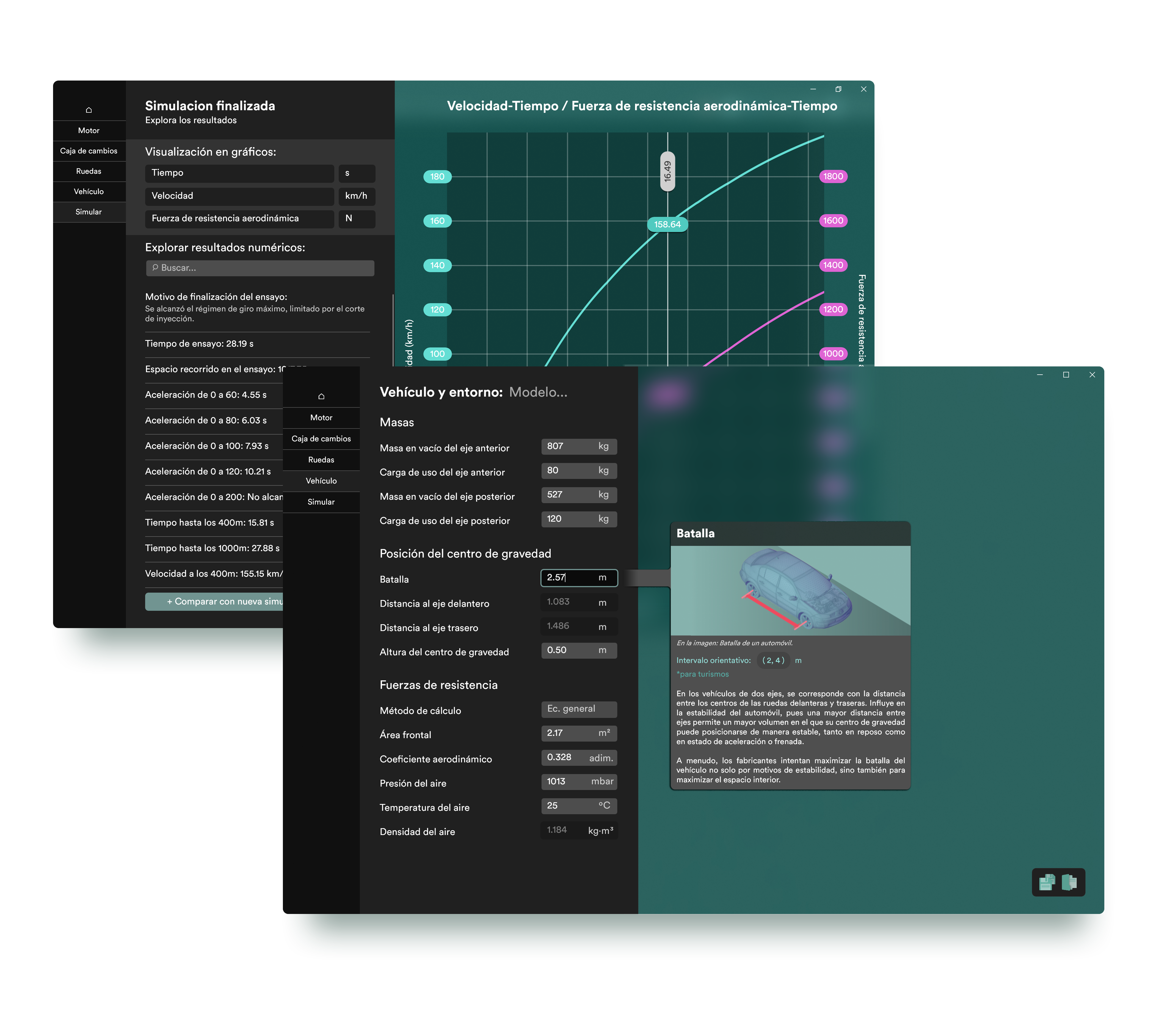
AutoLAB can simulate the behavior of road vehicles under two kinds of technical tests: one regarding their performance — pedal to the metal test —, and one assessing their overall consumption and efficiency (NEDC).
Of course, for accurate results, both simulation models require a very large number of input variables, both internal and environmental.
AutoLAB makes the data-entry process easy and suited to the teaching environment: unlike software solutions aimed at the professional world, where highly complex interfaces are justified by the presumption of the user's advanced knowledge, and by the low priority of having them master the program in a short timespan, AutoLAB offers a simple interface design, with intelligent assistance features that allow students to learn as they use it.
Interface design
Interface design
Guidance
at all
times
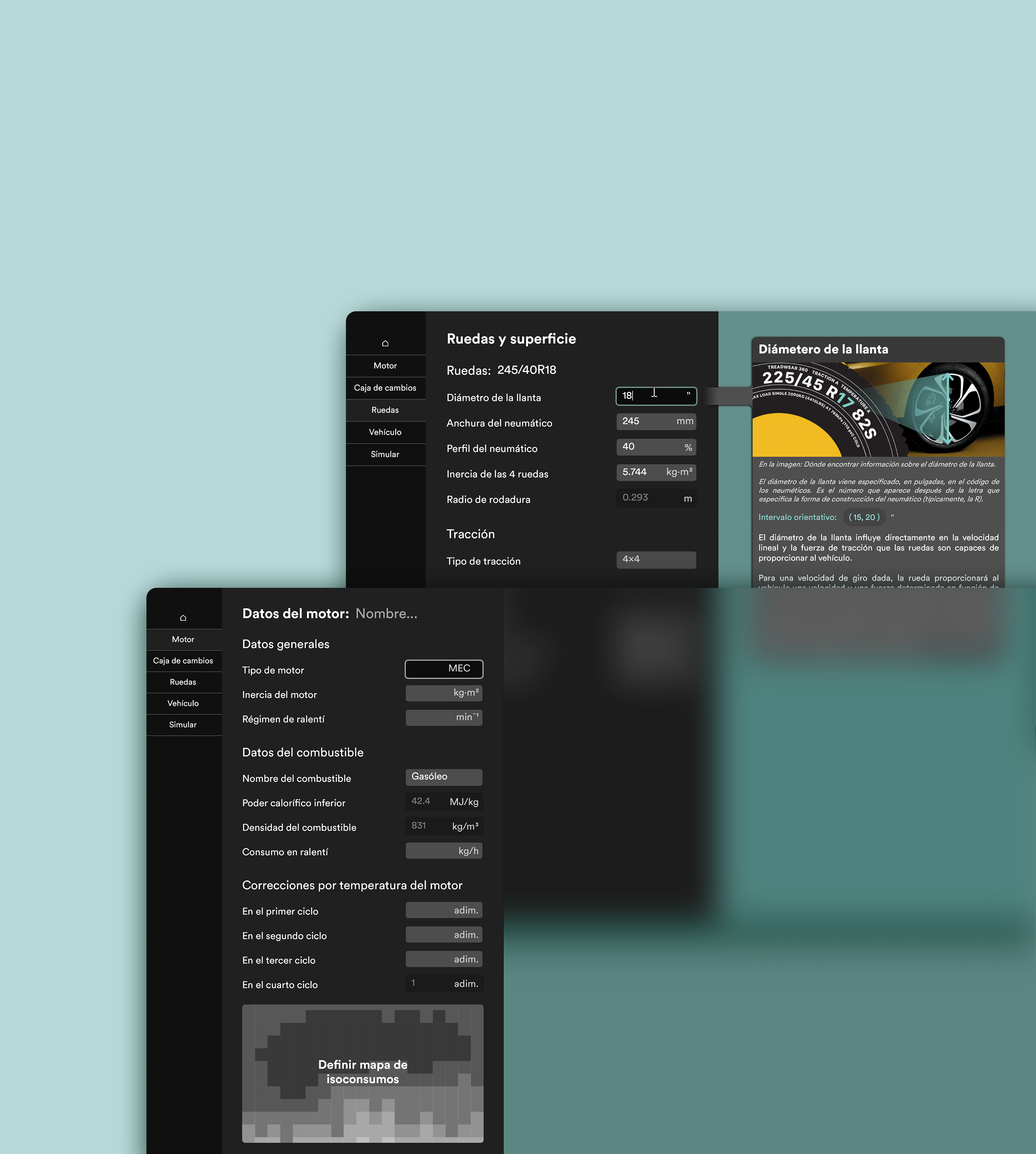
Given the high number of variables involved, AutoLAB includes assistance features so students do not need to leave the simulation environment to understand what is being asked of them.
- Information windows Every input field has a small assistance window, which automatically expands when the student is about to fill it out.
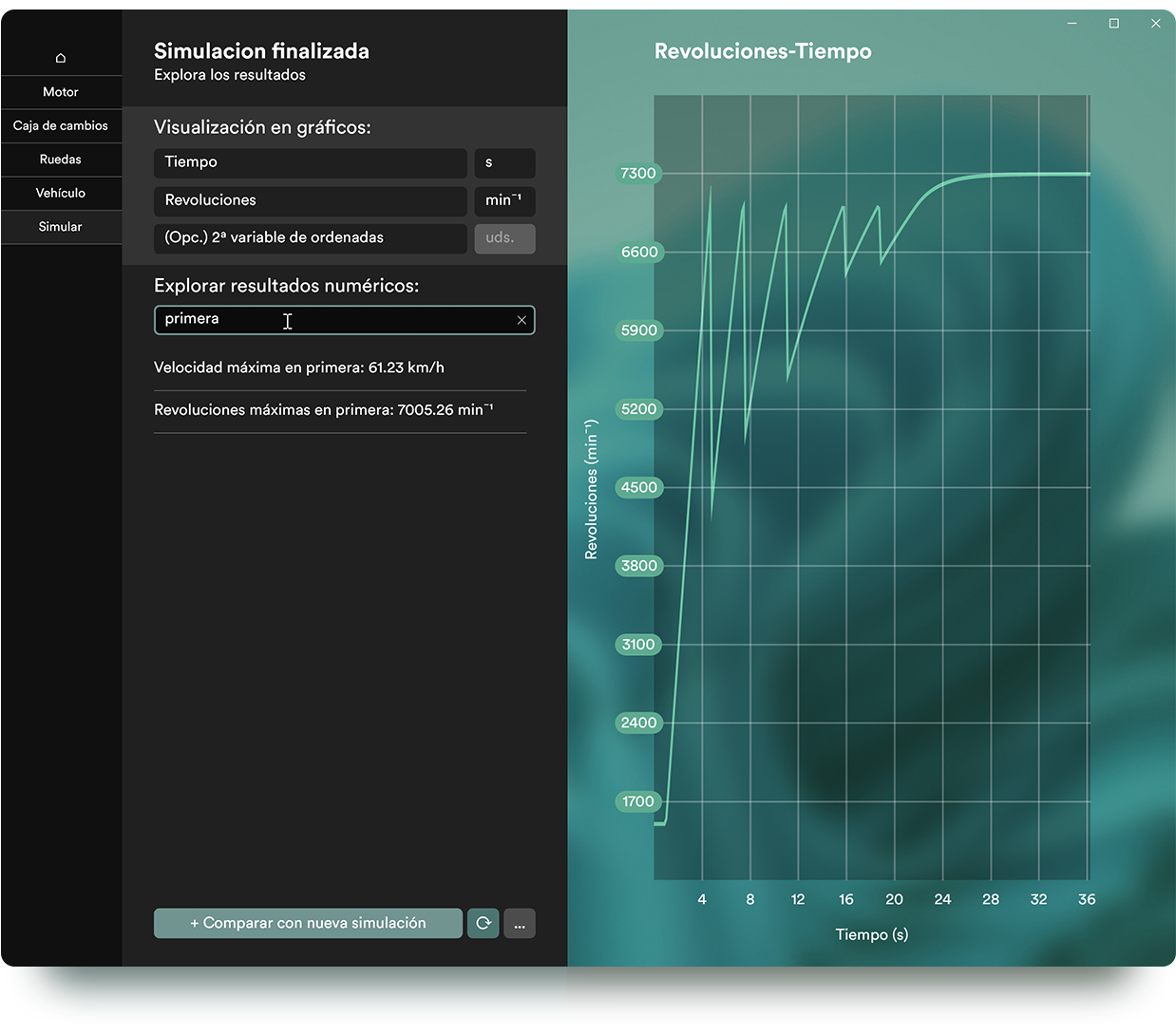
- Result filtering To facilitate navigation through the high number of result variables, the application has an integrated search bar.
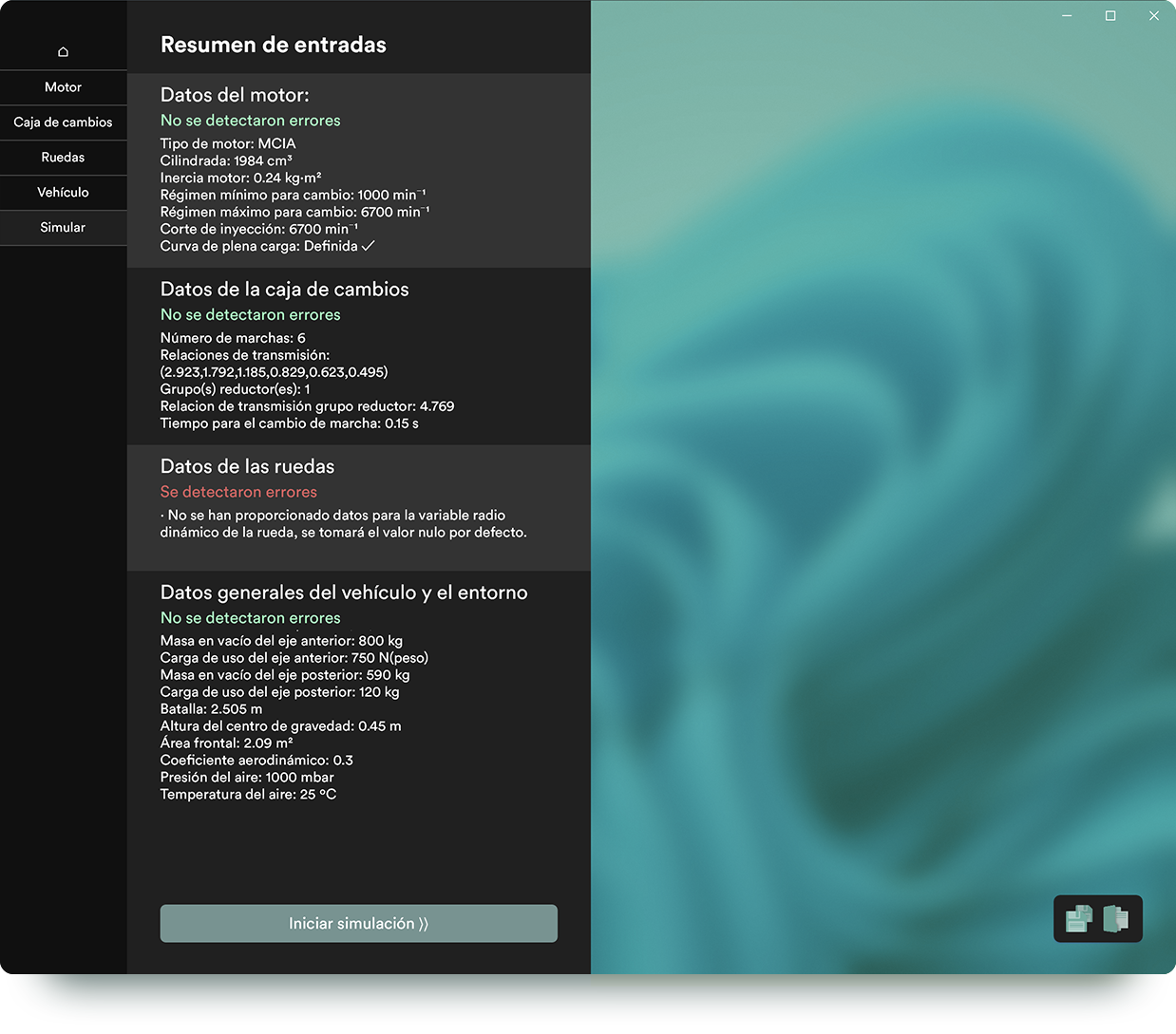
- Data validation Before running the simulation, the program verifies that all necessary data has been provided, and warns the user if there are any unusual or incorrectly formatted values.
Lifelike and
precise
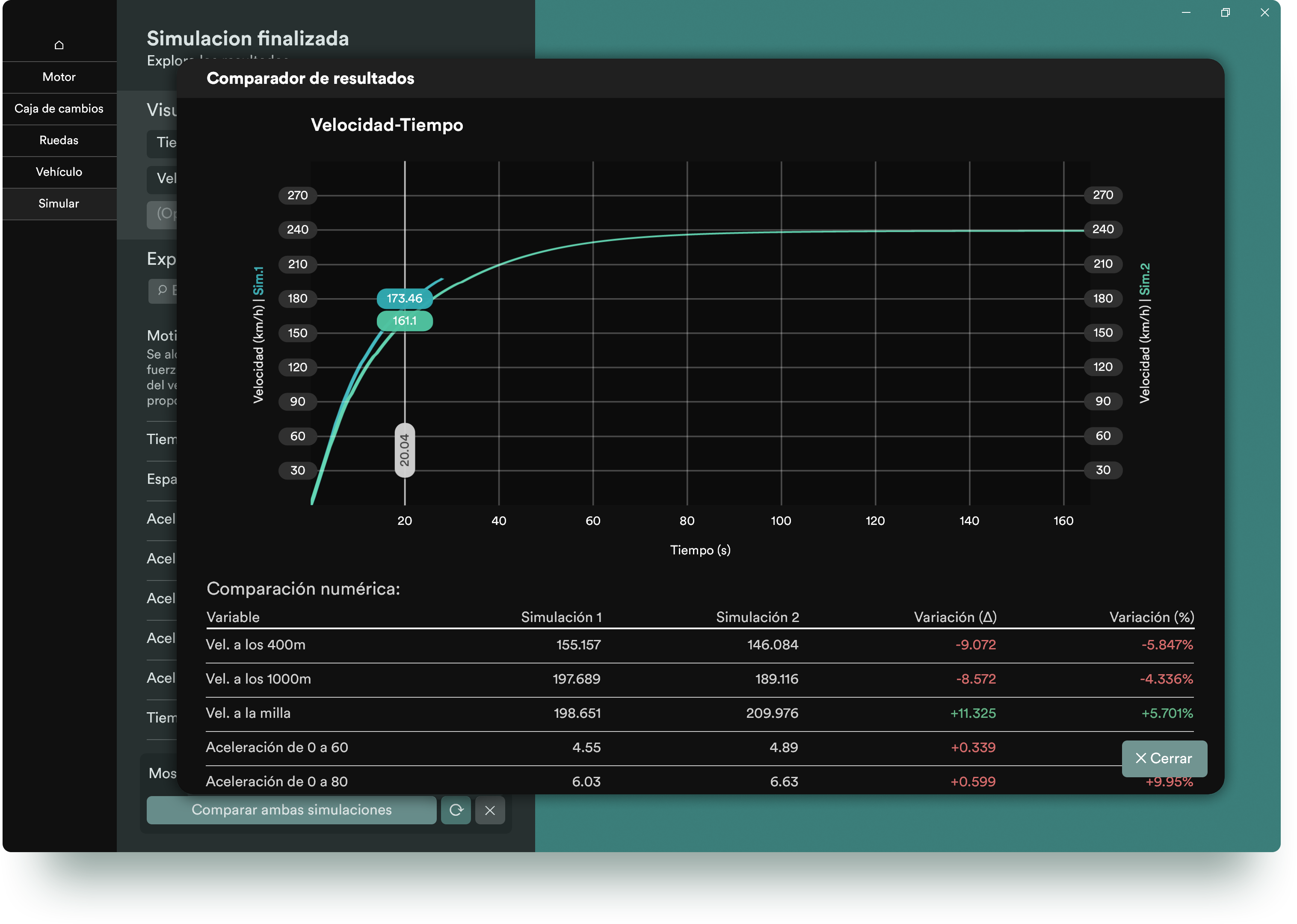
With accuracies greater than 98% for performance test simulations, and over 93% for consumption test simulations, AutoLAB can draw a picture of the behavior of road vehicles that is surely suitable for university teaching.
So much so that, since its launch, it has not only been used in undergraduate courses of Mechanical Engineering — as originally planned — but it is also used at a Master's level in Automotive Engineering.
Technical development
The development of AutoLAB was part of my Final Thesis in Mechanical Engineering, which was graded with top honors.
You can further explore the technical development of the project in the following memoir:
Scalability and
interoperability
AutoLAB was designed with the aim of standing the test of time:
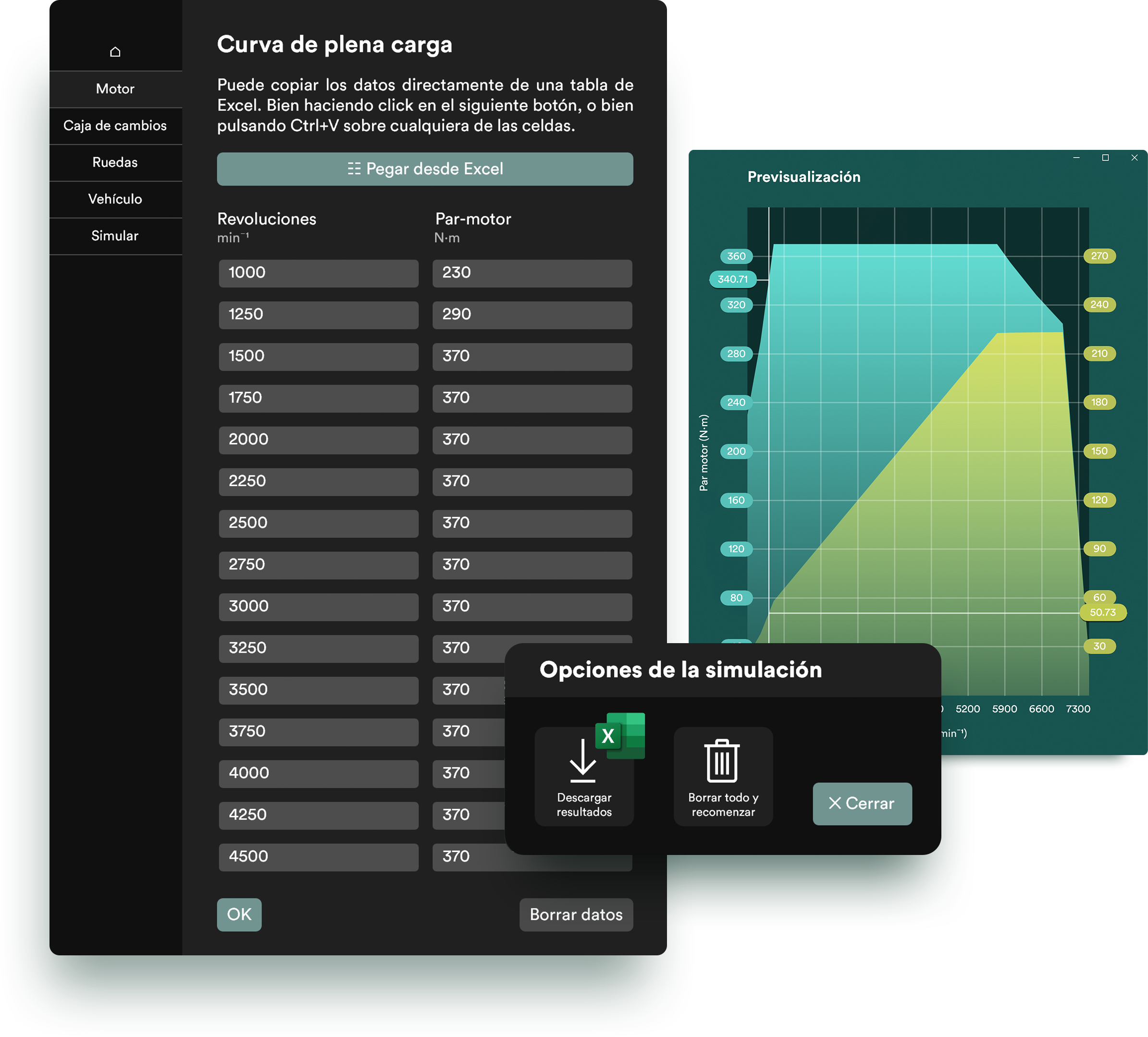
On the one hand, it allows students to import and export the data they work with to Excel and .csv-type files, so this information can later be used, complemented, and contrasted with third-party data-analysis and simulation programs.
On the other hand, the simulation models behind AutoLAB are built using Simulink — an industry standard — so that other academics and researchers can continue to improve and update the program.
Find out more
Links of
interest
AutoLAB is part of Universidad Politécnica de Madrid's UPMDesk application suite. You can find more information about it here and on the official AutoLAB download page.
Its development became part of my Final Thesis in Mechanical Engineering, which earned high honors. You can explore the memoir of this project here: