

ROBOGait
Project origins
Non-invasive analysis
of human
gait
ROBOGait is a mobile robot for medical uses that can collect 3D data of a person's joint motion as they walk, to detect neurological conditions like ALS.
The project was started in 2018 by researchers Diego Guffanti and Alberto Brunete from the Polytechnic University of Madrid Center for Automation and Robotics. They aimed to find non-invasive, low-cost methods to accurately analyze human gait.
ROBOGait can move along paths previously established by the doctor, keeping a fixed distance from the patient. This way, the patient simply has to follow the robot while it analyzes their gait.
Analysis system
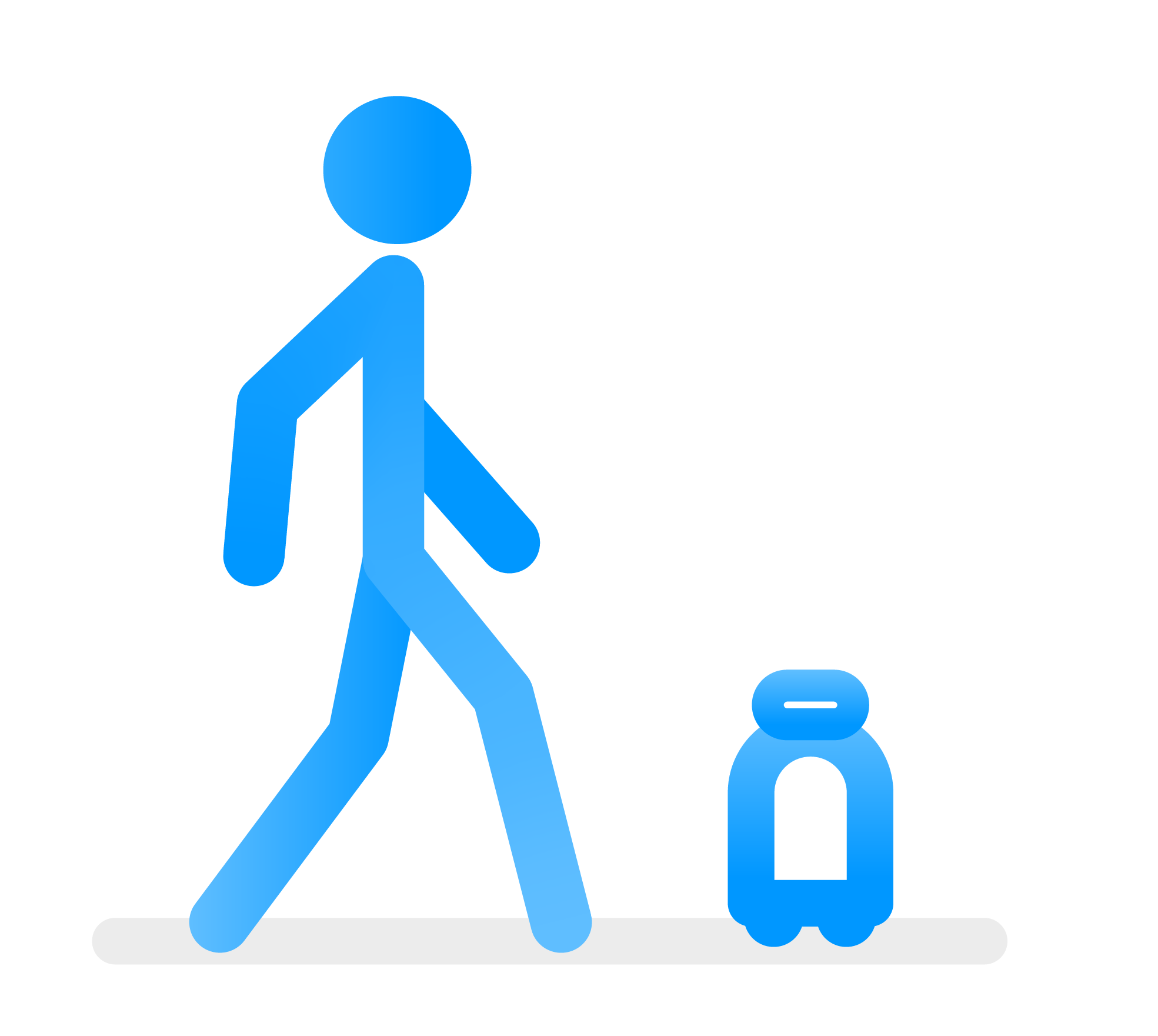
ROBOGait uses a set of RGBD sensors, capable of detecting color and depth, which combined with a body-tracking software developed using the Nuitrack SDK, is able to follow the movement of 19 body joints in real-time.
The precision of the system has been verified using the motion records of Vicon systems, which are motion tracking systems whose economic and space costs are much higher.
Design challenge
Tech for
non-techies
In February 2021, I joined the team and was responsible for Product Design and Interaction. The goal was to make ROBOGait a product that could easily be integrated into hospital settings. The task posed two fundamental challenges:
A remote control system,
no coding needed
When I joined the project, the only way to control the robot was through direct interaction with its internal computer via terminal commands and ROS software tools.
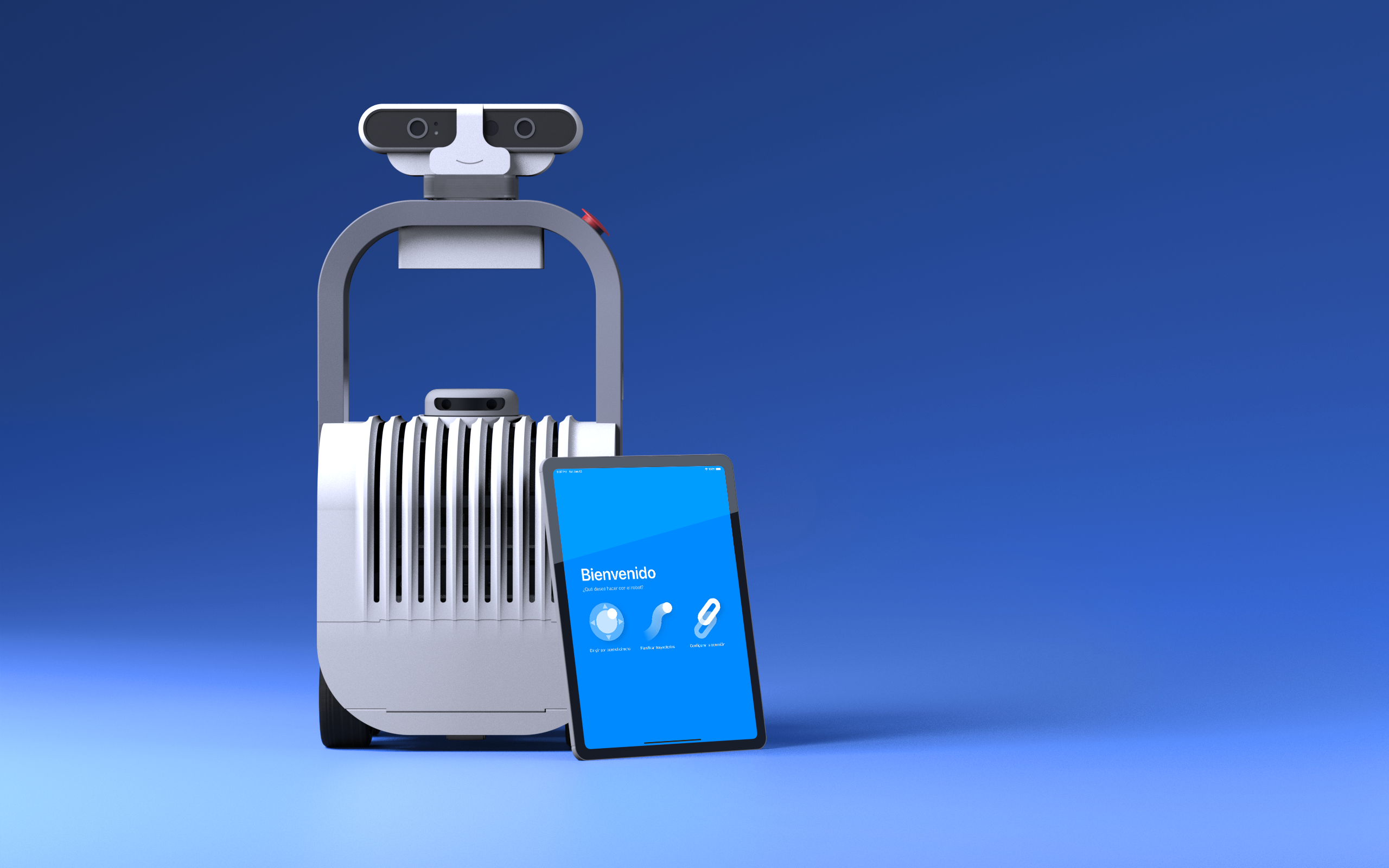
During my time on the project, I developed RosUI, an app for iOS and Android tablets, to remotely control the robot through an intuitive graphical user interface.
This would allow the future robot operators, the doctors, to get the most out of the product without having to acquire new skills.
RosUI
Don't code robot instructions.
Draw them.
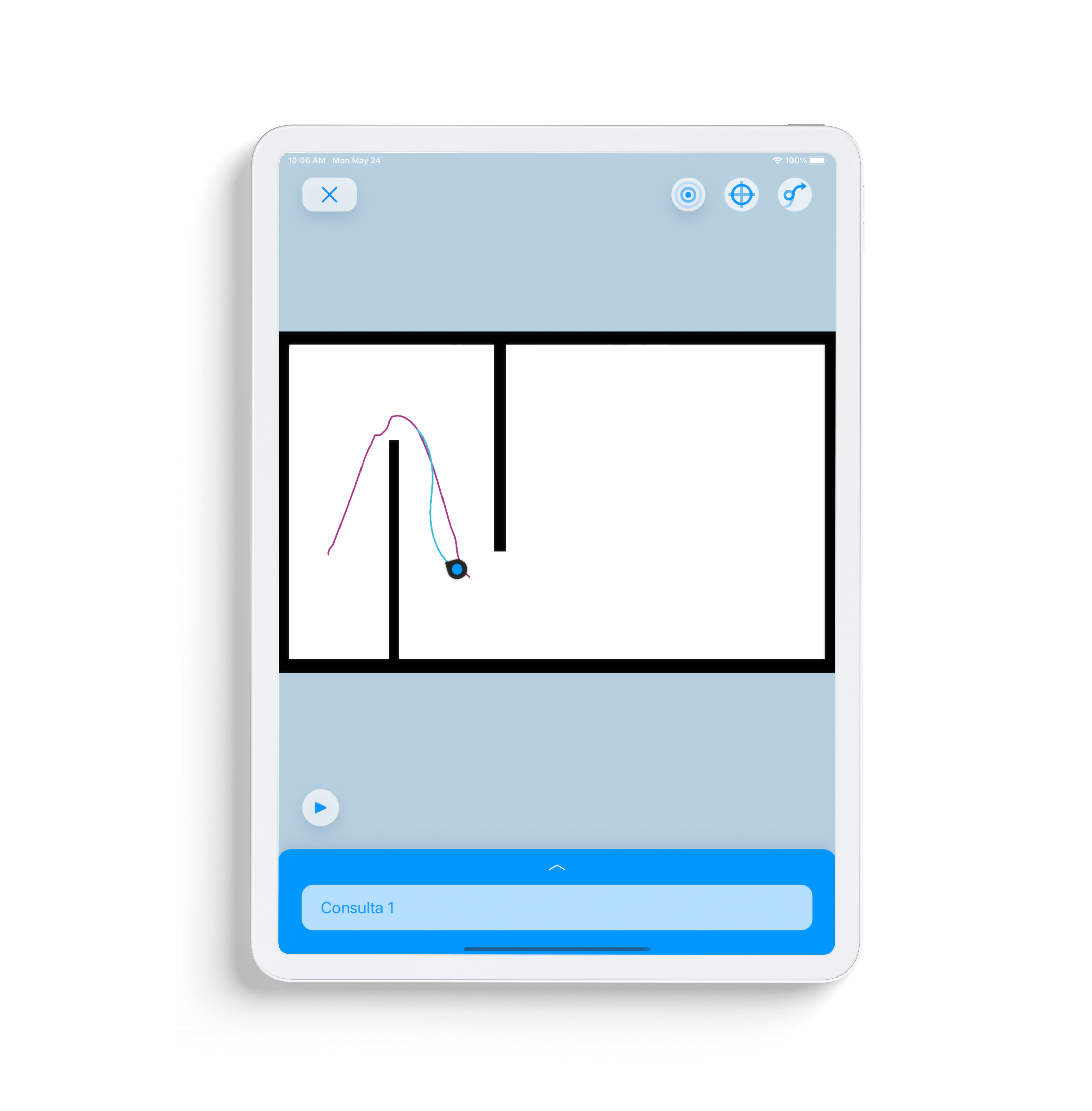
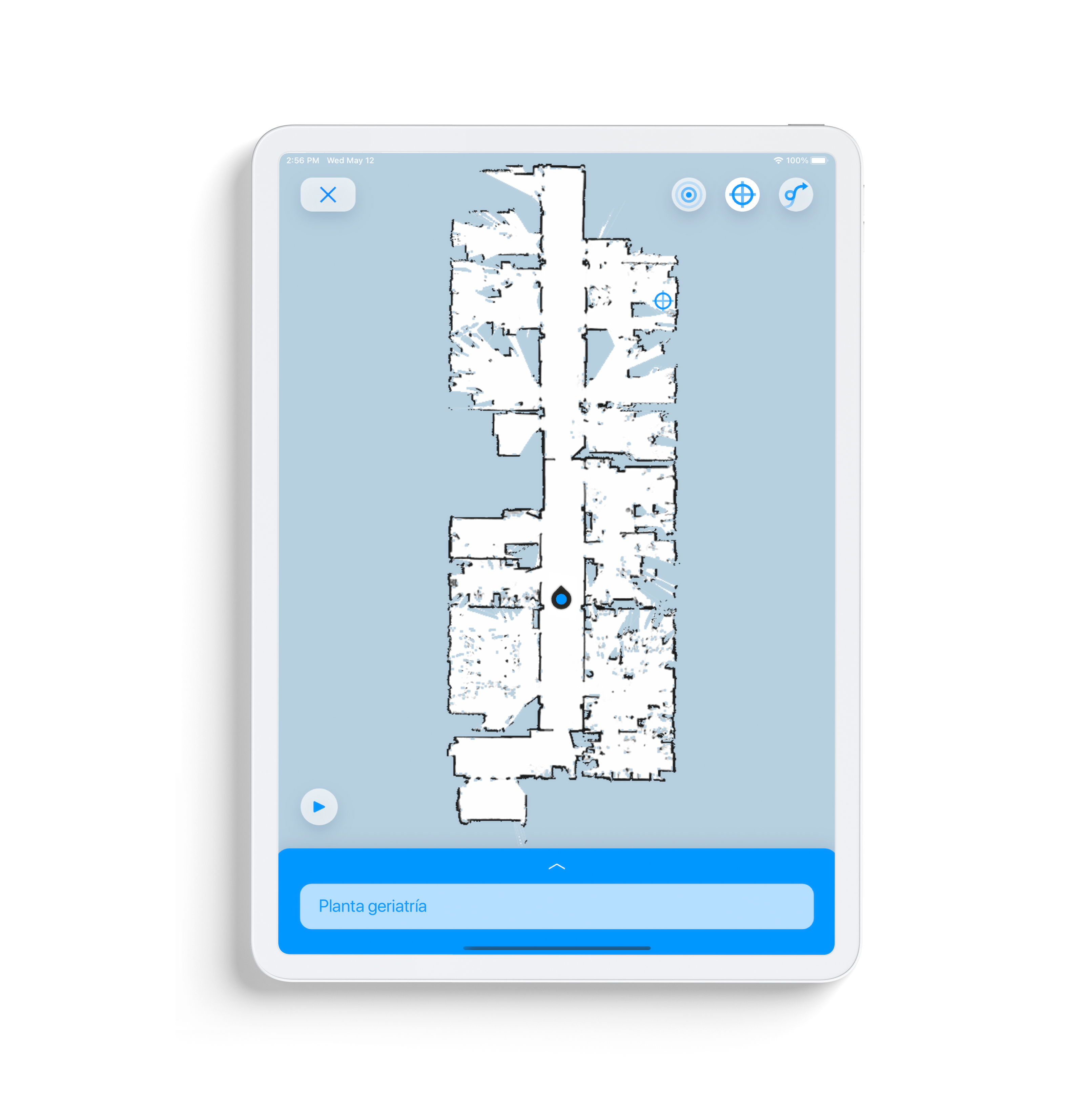
RosUI enables the user to start controlling ROBOGait without complicated commands. The user only needs to link the robot through a WiFi connection, and right away they will be able to visualize ROBOGait's current map of its environment on their tablet.
To make it move, all they have to do is draw the desired trajectory on the map or tap on it to indicate the target position and orientation. In both cases, the robot will compute a trajectory that follows these instructions while avoiding any obstacles along the way. It will execute this trajectory as the patient moves, always staying 2 meters away from them.
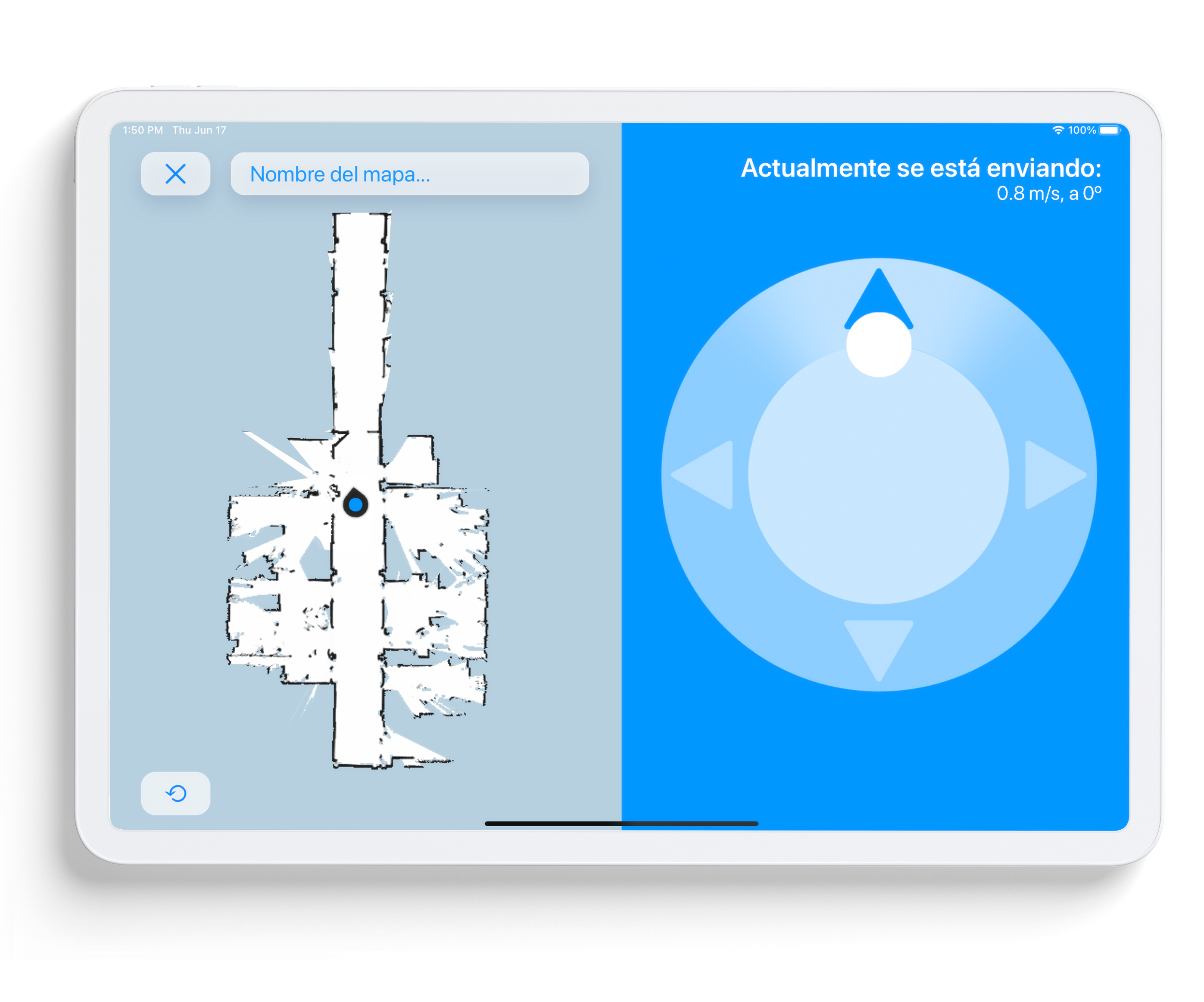
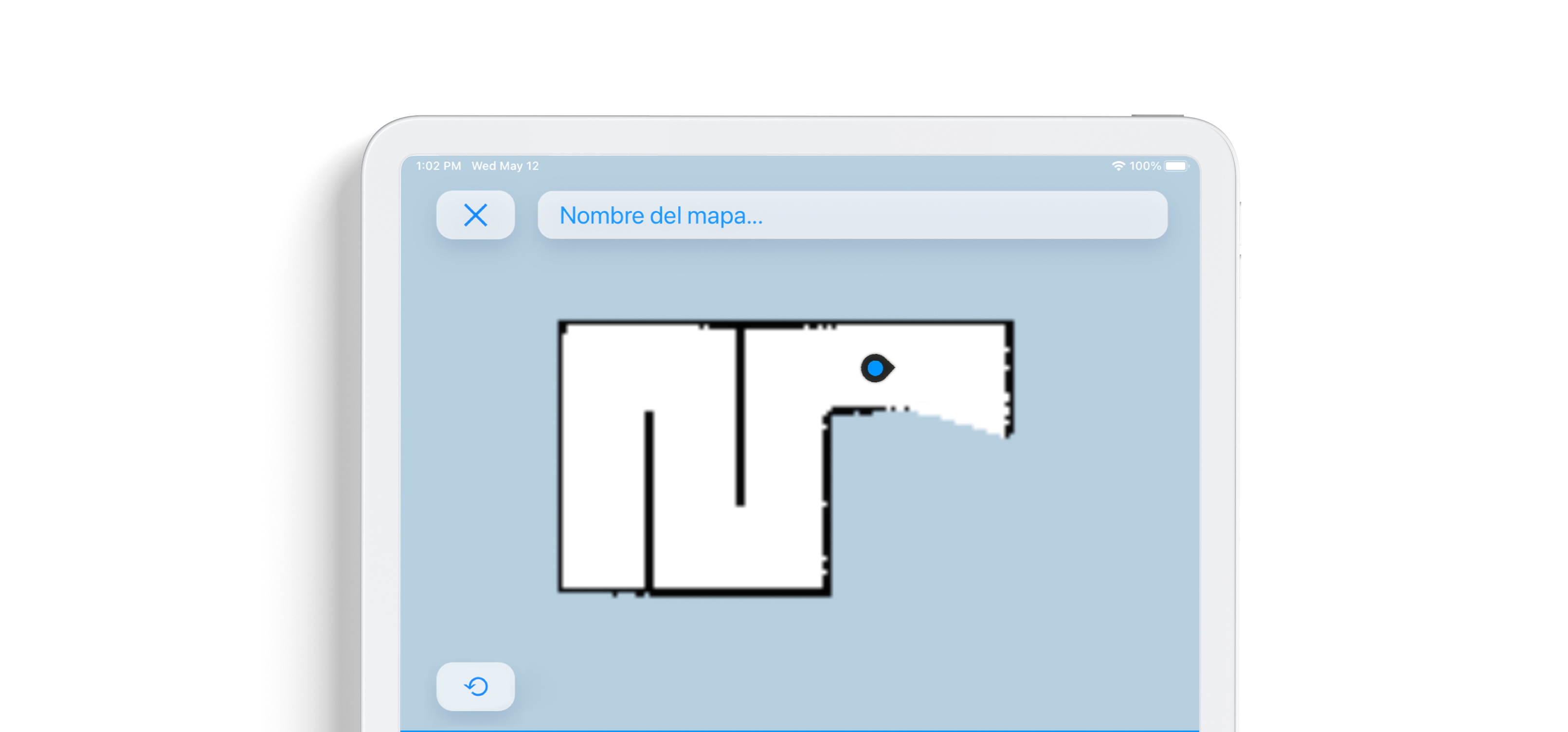
The application can also save the current map, load previously created maps, start and stop joint motion recordings, and directly control the robot using a virtual joystick.
Friendly, stable and safe redesign
As a non-industrial robot, the product's design needed to balance the system's technical requirements with aesthetic and safety considerations. These supplemental concerns specifically target elderly audiences with aversions to technology.
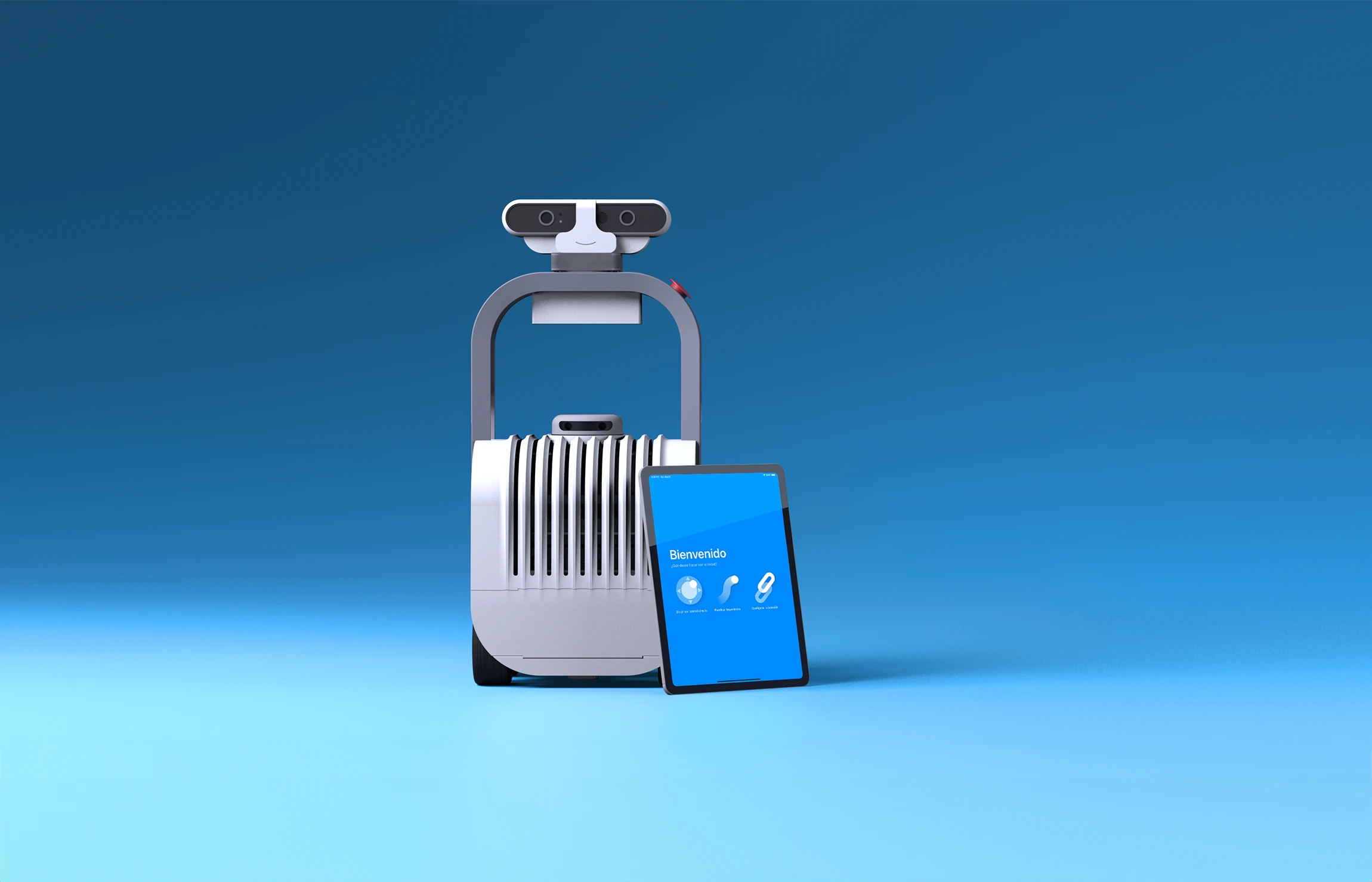
With this in mind, I designed the new ROBOGait.
ROBOGait video
Friendly appearance
The project sought to redesign ROBOGait in a way that would not appear distressing to patients while maintaining the original system's sensor positions.
A study involving more than 300 people of different ages, educational backgrounds, and occupations was developed through interviews and a survey to investigate the social perceptions of technology and the population's aesthetic tastes regarding robots.
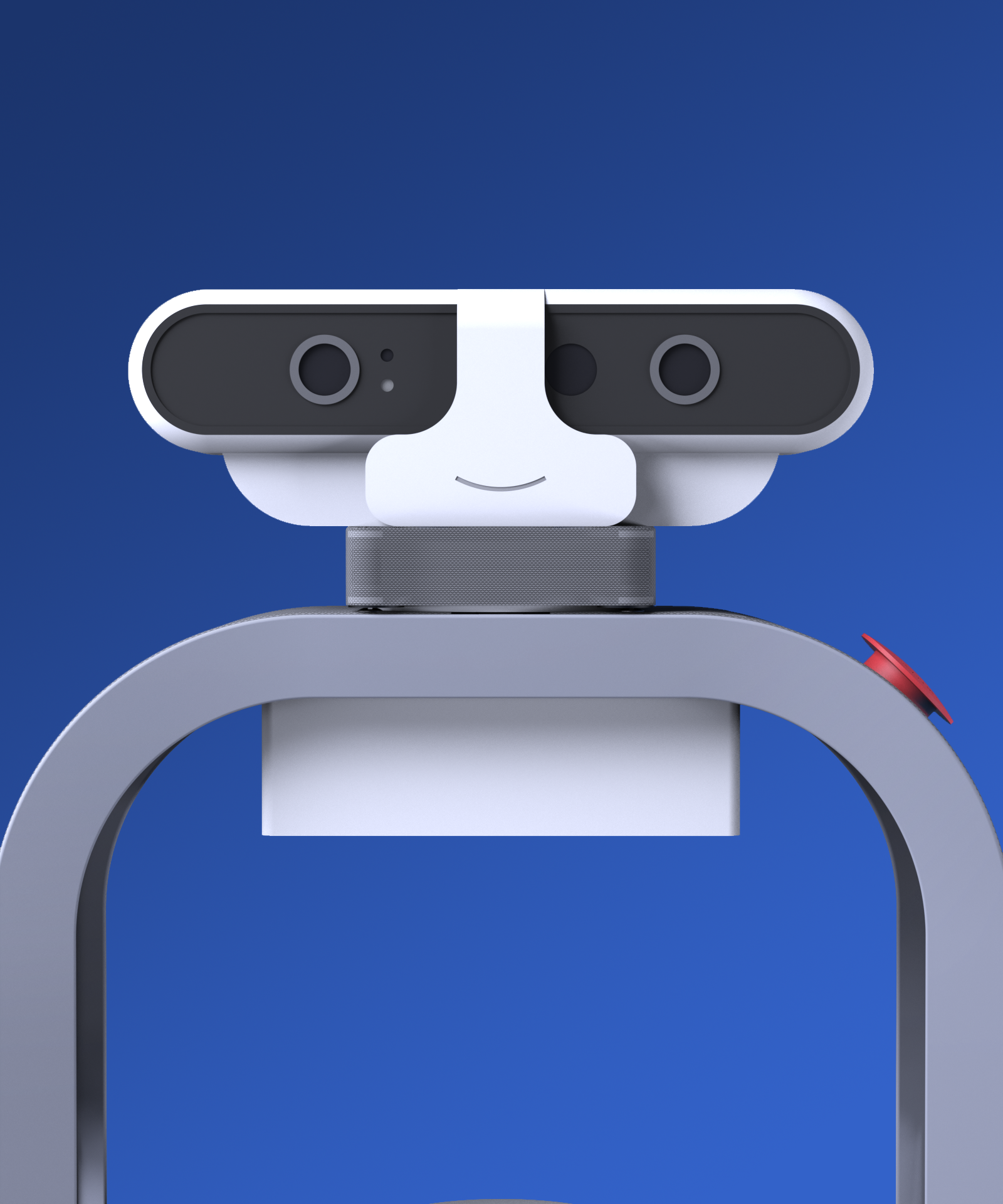
Finally, it was decided to give ROBOGait a design that would help the patients relate to the product by subtly showing cheerfulness and innocence without portraying excessive human or animal traits. This encourages positive feelings towards the product without having an alarming anthropomorphic appearance.
The design also features a metaphorical component; The sensors' enclosures and their relative placement within the structure give the product the appearance of a kangaroo robot with its baby tucked in the lower shell.
Finally, the product minimizes the use of heavy metals by integrating fabrics, plastics, and aluminum. The combination of these materials helps ROBOGait to move away from the popular idea that robots are powerful and dangerous machines.
Stable structure
The new ROBOGait's design improves the product's stability and resistance to vibrations.
Its internal components are reorganized to place its center of gravity as low and centered as possible, making the loss of balance less likely. In addition, it features extendable wings that increase its base area to maintain stability on uneven terrain or during high accelerations.
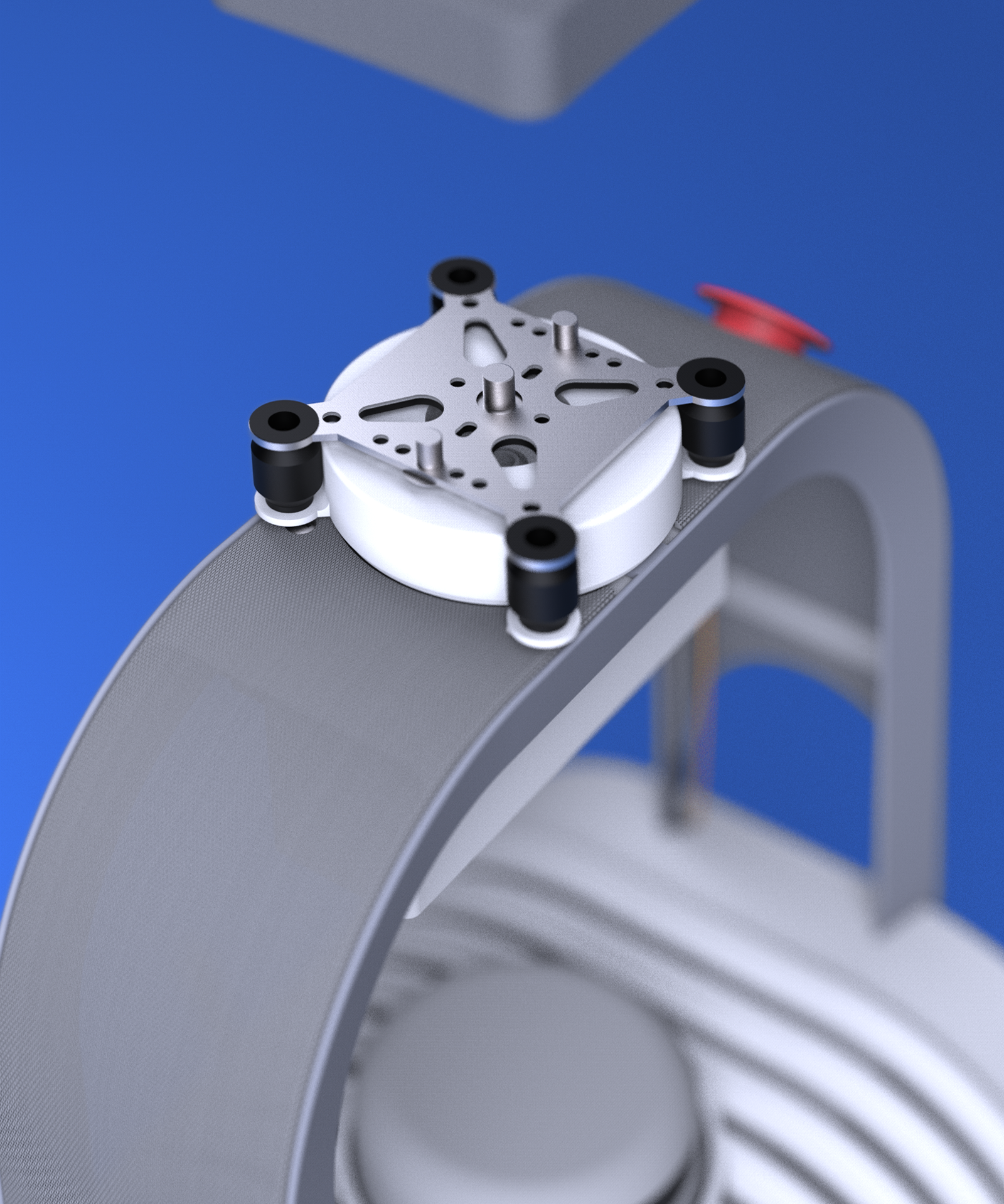
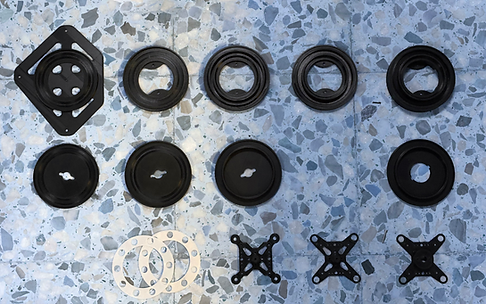
Reducing vibrations was an essential aspect of the project so the robot could gather accurate and reliable data. Multiple iterations of the camera's junction had to be designed, prototyped, and tested to reach a solution that allowed for smooth head turns and optimal damping on the go.
Safe design
The new ROBOGait structure uses lightweight materials that make it safer in case of accidental tripping or impacts.
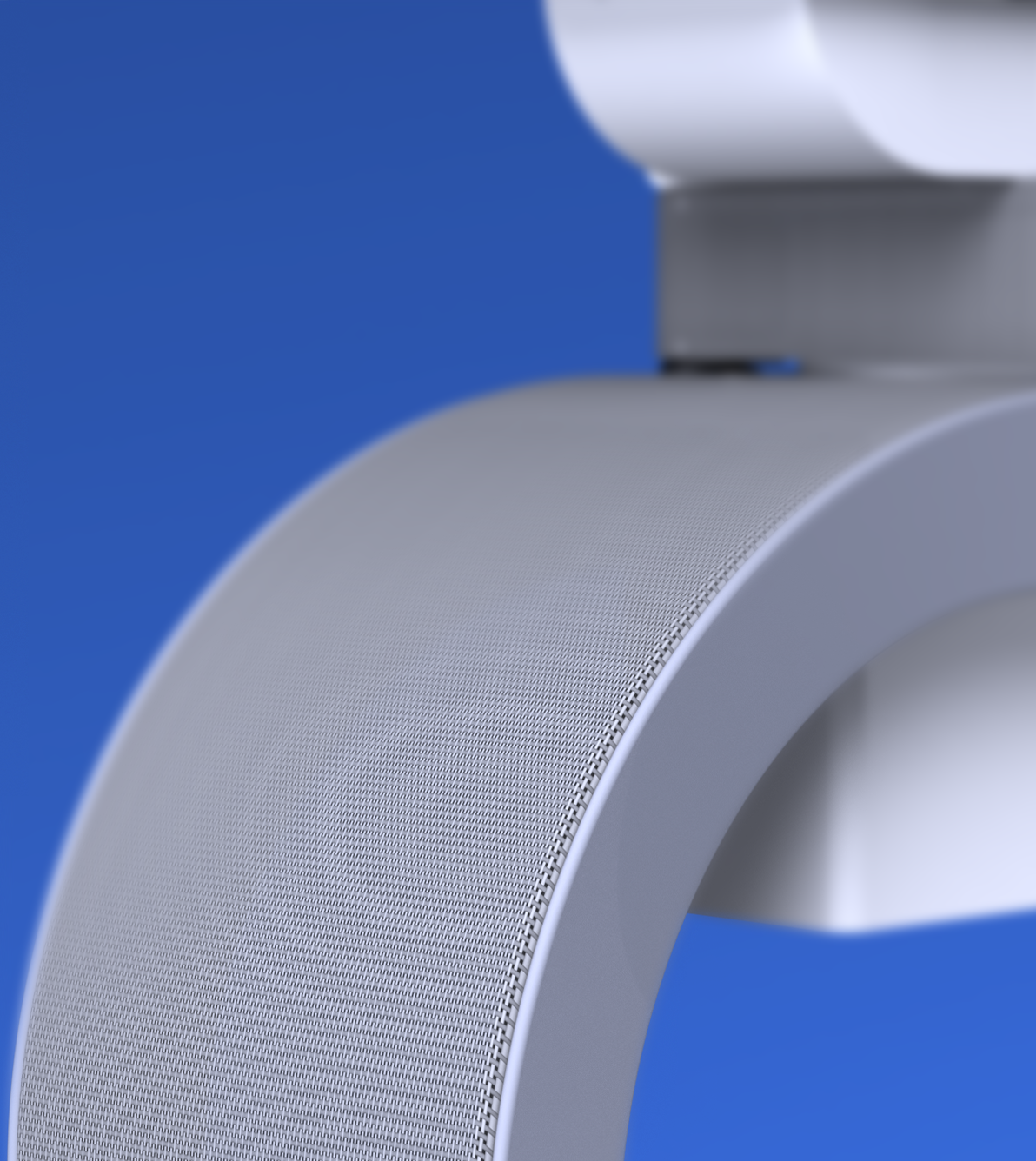
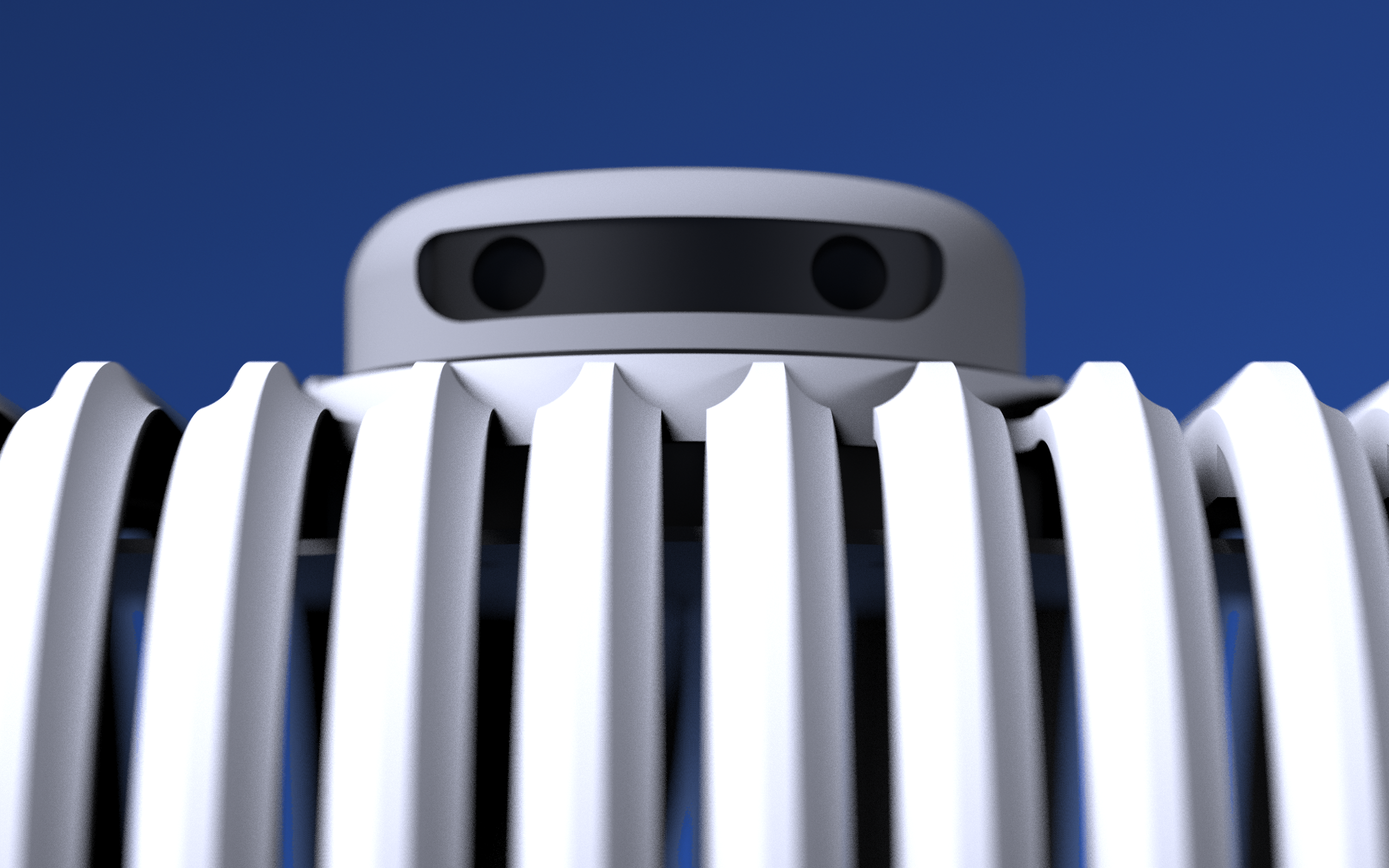
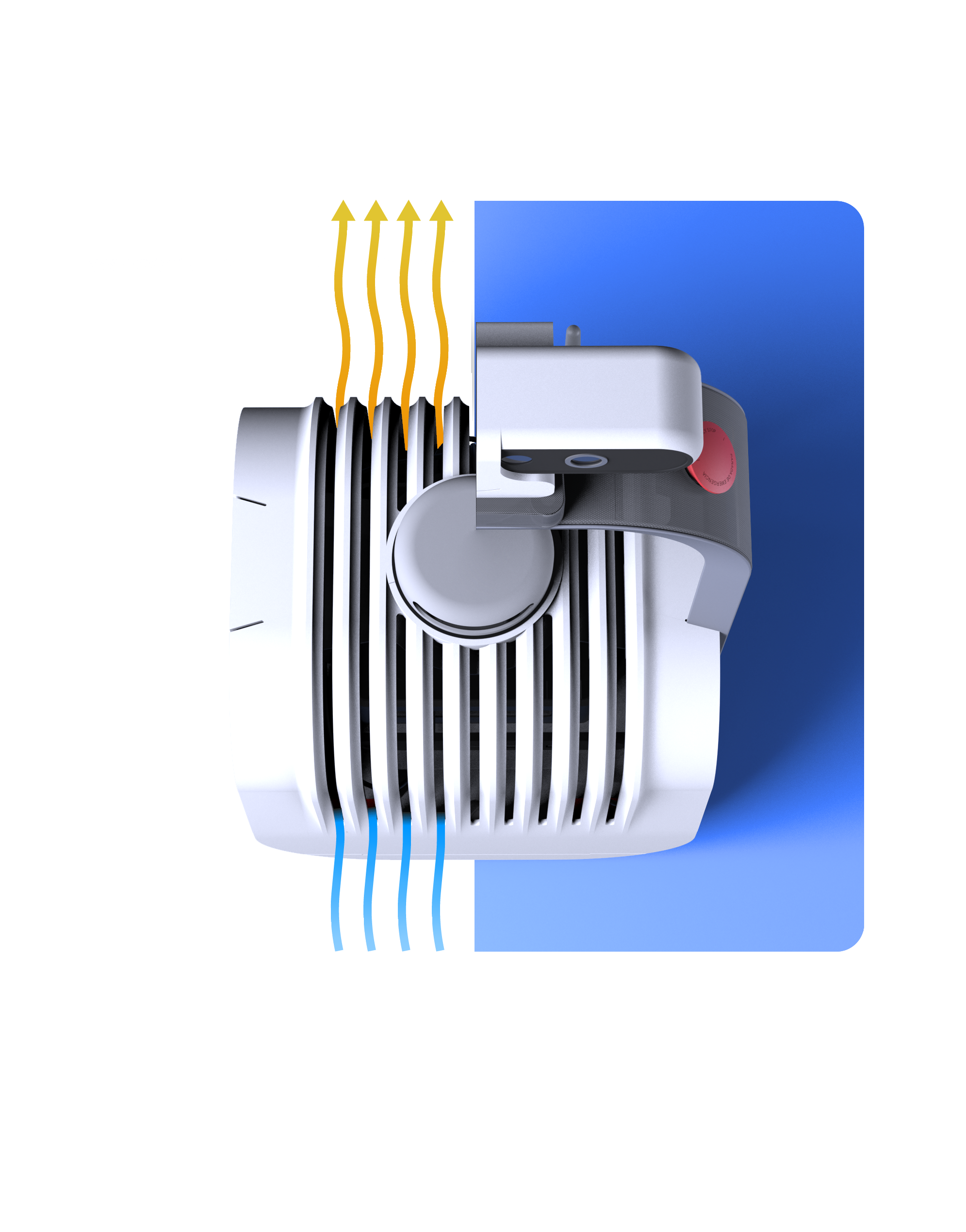
The lower shell protects the user from contact with heavy elements that accumulate a lot of heat. Inspired by traditional radiators, this shell's geometry aligns its fins with the robot's direction of movement, allowing for rapid cooling of its internal components.
Finally, the new ROBOGait has an emergency stop button so that the users can easily halt the robot if they ever feel in danger or uncomfortable.
Two options
ROBOGait,
ROBOGait +
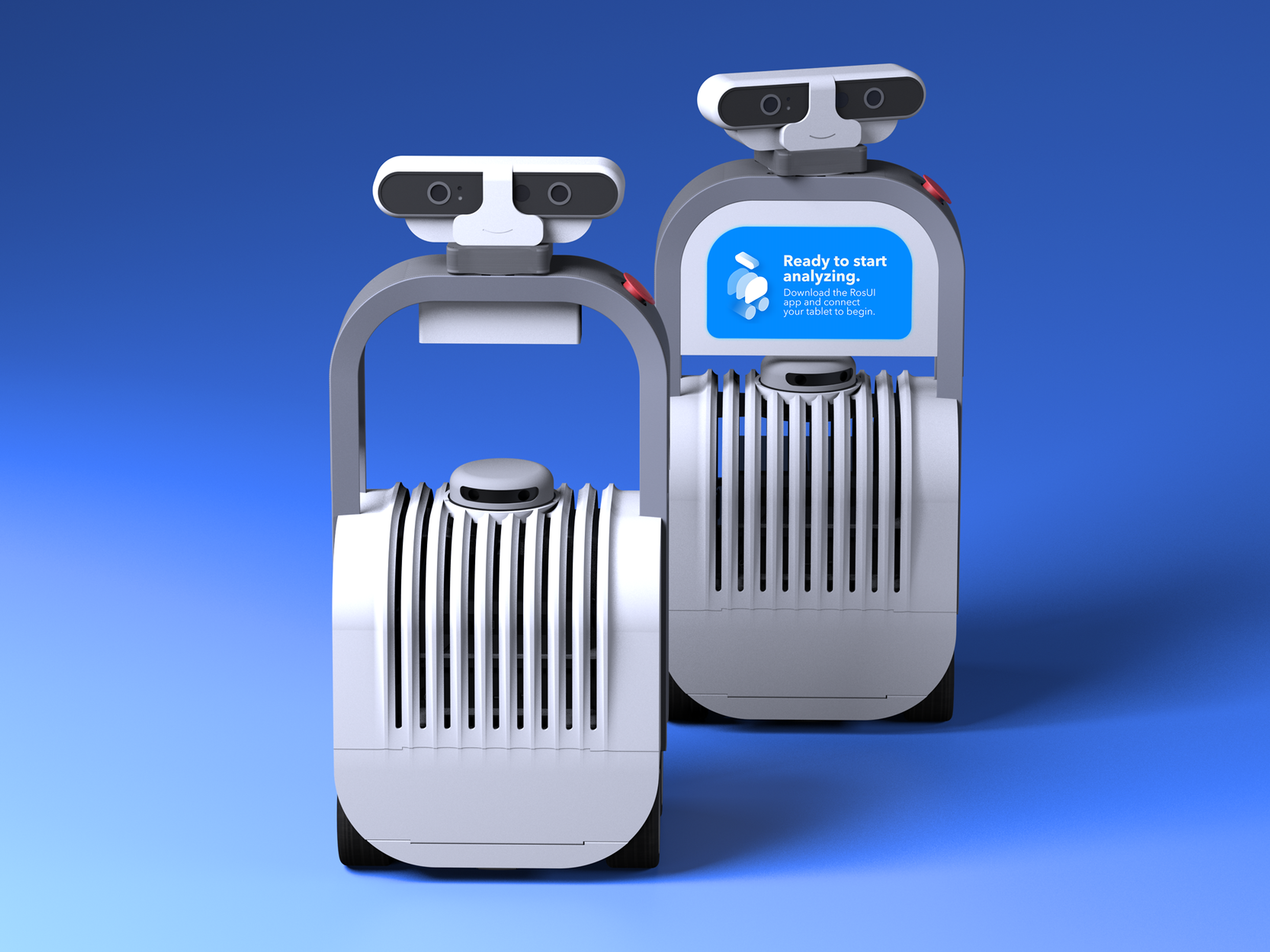
ROBOGait is designed to be a low-cost, accessible human gait analysis solution for everyone. For centers looking to offer the best user experience, ROBOGait+ also features an integrated screen to display feedback messages to the patient.